104-3
- Mike Dickey

- 4 days ago
- 4 min read
"If I had to be shot down, I'm pleased that it should have been by so good a man"
-Captain R.E. Wilson (on being shot down by Oswald Boelcke), 1916
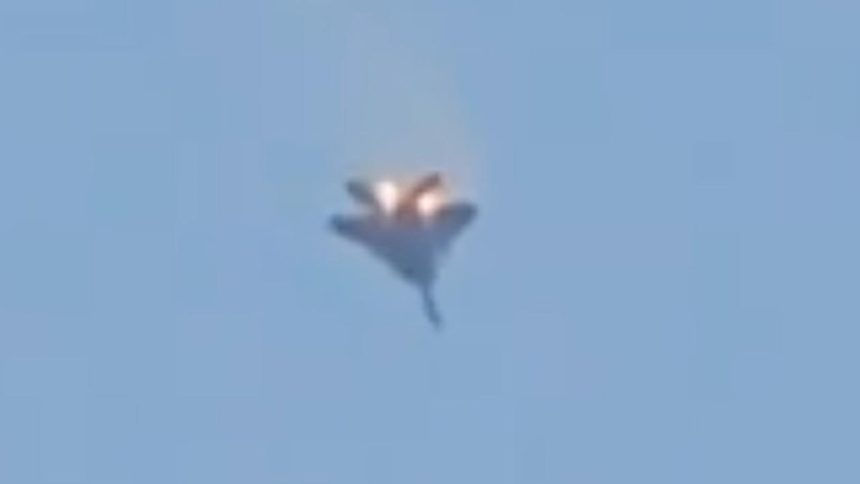
Since I last posted about it a couple days ago, the story of the three Strike Eagles shot down in Kuwait has changed. Now we're being told they were destroyed by a Kuwaiti F-18 as they returned from a mission in Iran.
The first F-15s ever to have been downed by another airplane, after over fifty years of service. And it was fratricide.
Defensive counter-air, or DCA, has always presented a difficult problem for the pilot when the skies get crowded.

The game is almost entirely played beyond visual range, by radar. A constellation of blips, with the pilot first trying to figure out which ones are tracking toward the bottom of the screen, toward whatever he's up there to protect. Then he must consider altitude and airspeed--low and fast is probably someone up to no good, while bumbling along at medium altitude and relatively slow speed--say, 20,000 feet and 300 knots--could be anything from a bomber separated from his strike package to a corporate jet trying to escape the conflict. We saw a couple of the latter in the first days of Desert Shield, as oil executives and crews fled Kuwait.
Then there's identification friend or foe, or IFF. All friendly aircraft are supposed to transmit a code, or "squawk", that a fighter like an F-15 can "interrogate" to discern whether the bogey is in fact a friendly, as opposed to a bandit ("bogey" simply means the target isn't identified; once the possibility of a friendly is ruled out, the target becomes a "bandit").
Not killing friendlies is, next to preventing aerial attack of the asset you've been assigned to protect, is a pretty critical facet of the job. A good friend of mine received the Distinguished Flying Cross during the Gulf War for not shooting down an Italian Tornado after AWACS had misidentified the target as a bandit and cleared him to engage. It didn't look right--the contact was flying slow and in a straight line--and he opted to VID (visually identify) the mystery object. It was only when his formation rolled in behind the hapless Italians that everyone realized a tragic case of the fog of war killing someone had been barely avoided.
So what went wrong this week? It's hard to say--I've been out of the business for over three decades, and technology has come a long way since your author left the round dial Air Force. That said, it's my blog and I'm free to speculate.
I think the critical variable here that wasn't present in 1991 is the proliferation of cheap, unmanned drones. One had struck nearby that day, killing six of our soldiers, so you have to figure everyone was a little on edge. The pilot of the Hornet would've likely had a sea of contacts on his radar, drones and friendly aircraft cycling in and out of the combat zone from their base in Kuwait. IFF can be tricky when the picture is that crowded, and I imagine it'd be very difficult to sort through blips that flashed friendly and those that failed to respond. And F-15s in the traffic pattern would've been at around the same altitude and airspeed, more or less, as the drones the Hornet was there to intercept.
So, a difficult tactical problem for the Kuwaiti aircrew. But still, on balance, inexcusable. If you're not sure, don't shoot. It's that simple. They had to know they had friendlies in the pattern. It's at least possible that the Hornet could've closed in and visually identified the target drones, which certainly weren't going to shoot back. None of that happened, and three Eagles bit the dust. Thank God no one was seriously hurt.
As for the Eagle crews, if in fact they were on their way to land there probably wasn't much they could do. In landing configuration the jet is slow, dirty, and sloppy, not really capable of aggressive defensive maneuvering without risking a stall. Although the radar warning receiver was probably screaming at them, the warning probably didn't go from "tracking" to "launch" until a few seconds before impact, given the ranges here. And it may not have gone off at all if the Hornet was using a heat seeking missile or an AMRAAM that came off the rail and went fully autonomous, no longer linked to the Hornet's radar. I'm not sure this "pit bull mode", as they used to call it, would trigger a warning from the RWR.
The Eagles are in fact equipped with a countermeasures dispenser carrying chaff and flares, but we usually disabled these as we returned to base to keep from inadvertently spilling chaff and flares in the pattern. There was a time, however, early in Desert Shield, that we armed our CMDs on departure or arrival to protect against the possibility of a bad guy waiting for us at one end of the runway with a shoulder launched missile.
So I guess I get how this happened, even if I don't. Hegseth has made much over the last few days of eviscerating the rules of engagement to "unleash" our warfighters. This would seem to be a consequence of that type of thinking.


Comments